Blog
1.5 Million Tourists Does Not Mean 1.5 Million Potential Customers for Your Business
September 15, 2026
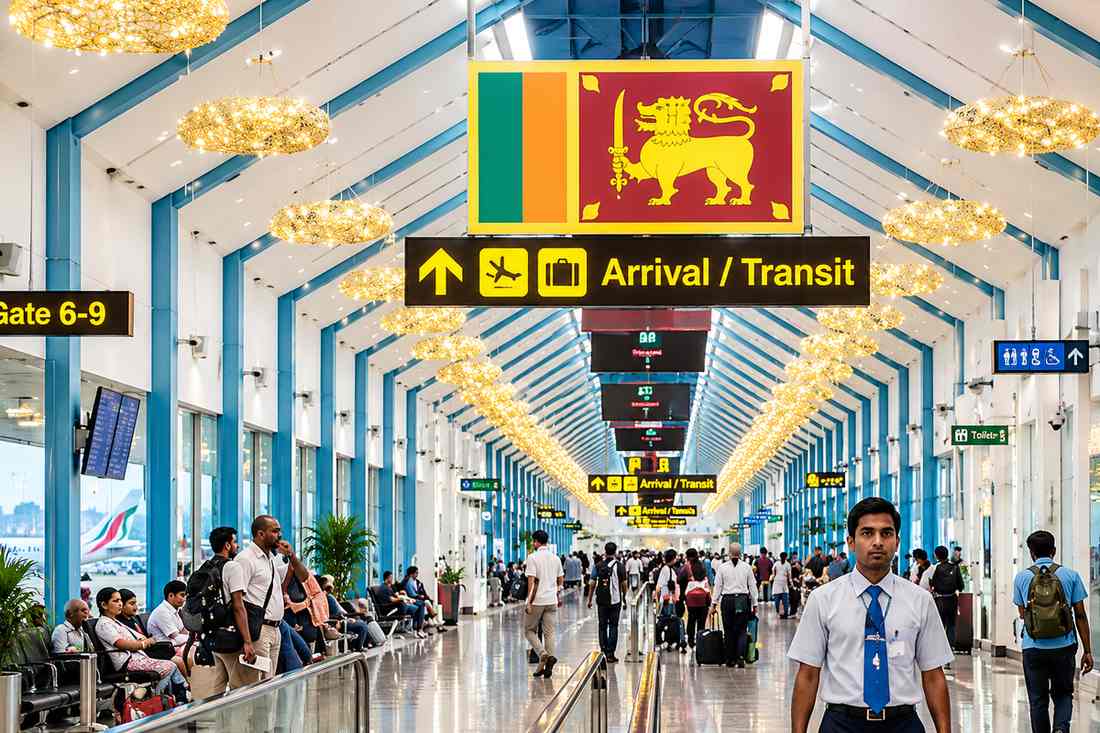
Sri Lanka has passed 1.5 million arrivals in 2026, but source-market data shows why tourism businesses need segmentation instead of broad international campaigns.
Sri Lanka recorded 1,567,007 tourist arrivals between 1 January and 6 September 2026. India remained the dominant source market with 395,377 visitors, followed by the United Kingdom with 152,625 and China with 102,473. Those are impressive national numbers, but they can become dangerous when individual tourism businesses interpret them too simplistically.
A three-bedroom luxury villa in Ahangama does not have a market of 1.5 million people. Neither does a private wildlife photographer, surf camp, Ayurveda retreat or premium fourteen-day tour operator. The real potential market is the smaller group inside those arrivals whose travel style, budget, timing and needs match what the business actually sells.
This is why audience segmentation matters. Tourism companies frequently begin campaigns by selecting several countries, an age range and a few travel interests inside an advertising platform. That may technically create an audience, but it does not automatically create a useful customer segment.
A proper segment begins with the product. A six-night wellness programme may suit travellers with a very different booking window, budget and motivation from a weekend surf hostel. A luxury private driver service has a different customer from a shared backpacker transfer. The marketing should begin by defining who receives the greatest value from the product rather than asking how many people can potentially see the advertisement.
Source-market data should then refine that understanding. India represented around a quarter of Sri Lanka’s year-to-date arrivals by early September, but an individual business should still ask what percentage of its own profitable customers actually come from India. National market share and company-level customer value are not always the same thing.
This is where analytics becomes useful. Businesses should record source country, trip type, booking value, length of stay, lead source and conversion outcome instead of simply counting enquiries. After several months, patterns can begin appearing. One market may generate large enquiry volumes but weak conversions, while another produces fewer conversations and much larger bookings.
Campaign budgets should follow that evidence. If British couples consistently purchase twelve-day private tours while another market mainly asks for one-day transfers, the same advertising budget and message may not make sense for both. Segmentation helps the business invest according to commercial value rather than population size.
The same principle applies to content. One generic “Visit Sri Lanka With Us” campaign cannot speak equally well to honeymooners, families, surfers, corporate travellers and wildlife photographers. Relevance becomes stronger as the message becomes more connected to a real traveller and a real use case.
Sri Lanka’s arrival number tells us the size of the tourism economy. Your own customer data should tell you which part of that economy you actually want.
At Tourithm, we believe tourism marketing gets significantly stronger once businesses stop targeting travellers as one enormous audience and start building campaigns around the customers most likely to become profitable bookings.