Blog / / Tourithm
Social Media Is Becoming a Travel Search Engine. Is Your Tourism Business Ready?
Travellers increasingly discover and book activities through TikTok, Instagram and creator content. Learn what this means for Sri Lankan tourism businesses in 2026.
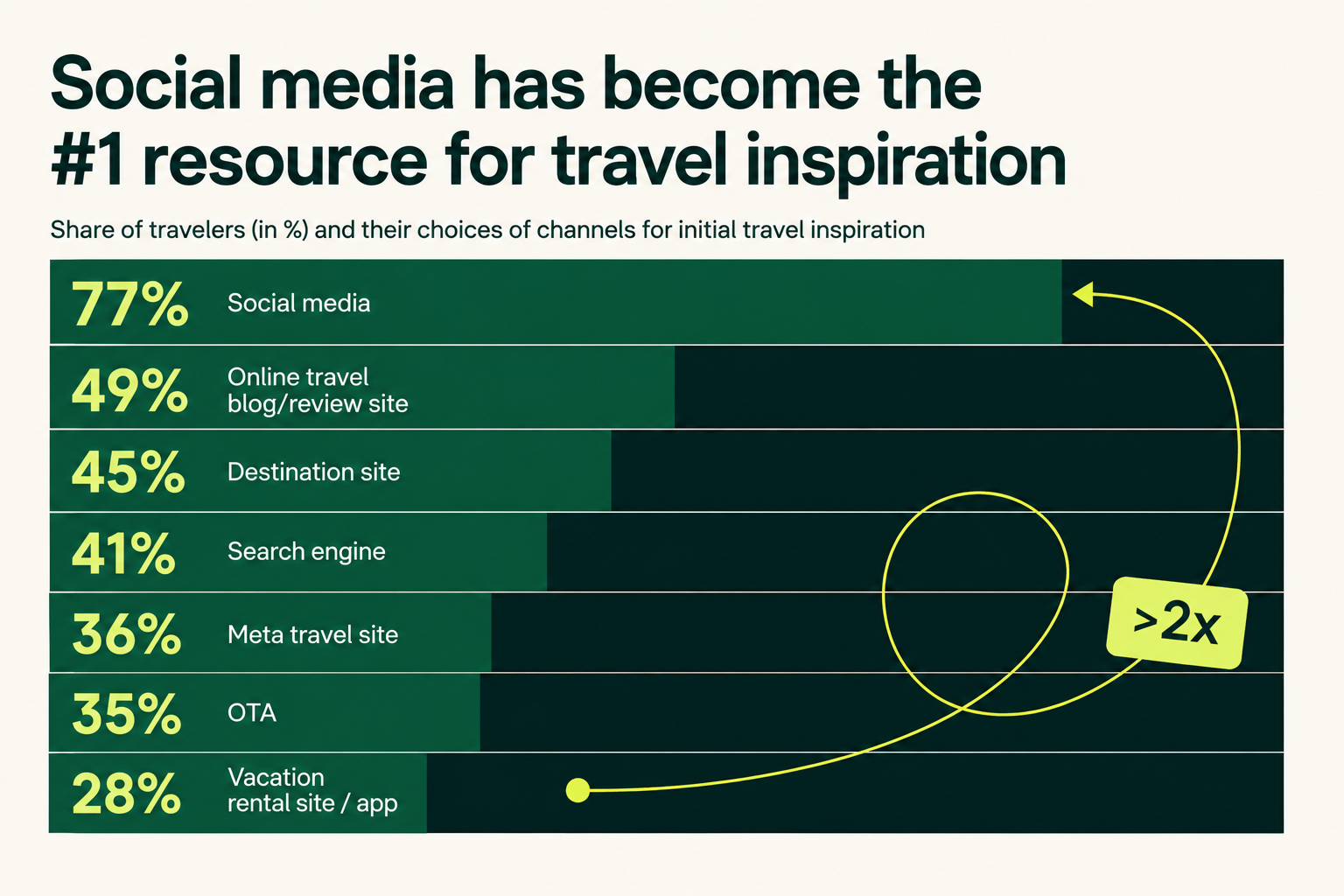
For years, tourism businesses treated social media as the awareness side of marketing. Instagram was where people discovered beautiful places, while Google and booking platforms were where the serious purchasing happened. That separation is becoming much weaker.
New research released by TUI Musement in August 2026 found that 43% of surveyed travellers had booked a trip or activity after seeing a viral social media post, while TikTok emerged as the leading travel inspiration source for Gen Z respondents. The same research found that social media is influencing not only where people travel, but which tourist sites and experiences they choose after arriving.
For Sri Lankan tourism businesses, that changes the role of content. A reel showing a waterfall, cooking experience, restaurant, safari or boutique stay may not simply generate views. It can become the beginning of an actual purchase decision.
The problem is that many businesses still create social media like digital brochures. A static image appears with a large logo, several lines of promotional text and a phone number. The content may technically advertise the business, but it does very little to help someone imagine participating in the experience.
Travel content works because it makes people feel something about a place. Video is particularly powerful because movement, sound and human behaviour communicate atmosphere much more effectively than a heavily designed poster. Expedia research published around travel content found video significantly more influential on travel decisions than static imagery, while transparency and authenticity were among the tones that built the most trust.
This does not mean every tourism business needs to chase every trend or perform dances for TikTok. A safari operator can create strong short-form content by explaining animal behaviour. A restaurant can show a signature dish being prepared. A driver can show a scenic route. A hotel can show what waking up at the property actually feels like.
The strongest content connects inspiration to information. Someone who becomes interested after seeing a reel should be able to find the business name, location, price range, availability or booking route without going through a digital treasure hunt.
Social SEO becomes relevant here too. Captions, location information, spoken keywords, titles and profile descriptions can help platforms understand what the content is about. A beautiful video captioned only with emojis wastes useful context.
Creator partnerships should also be judged more carefully. The biggest follower count is not automatically the most valuable partnership. A smaller creator whose audience genuinely travels to Sri Lanka may produce more useful demand than a huge entertainment account with little travel relevance.
Tourism businesses should therefore start thinking about social media as part inspiration engine, part search environment and part sales journey. Content should create desire, but the surrounding digital system still needs to convert that desire into action.
At Tourithm, we believe tourism social media becomes far more valuable when it stops being treated as a posting obligation. Every piece of content should have a role inside the traveller's journey, whether that role is discovery, trust, education or conversion.