Blog / / Tourithm
Google Is Changing How Travel Experiences Are Advertised. Your Tour Website Cannot Stay Generic.
Google is migrating Travel campaigns for activities into Search campaigns for Travel in Q3 2026. Learn what Sri Lankan tour and experience operators should prepare.
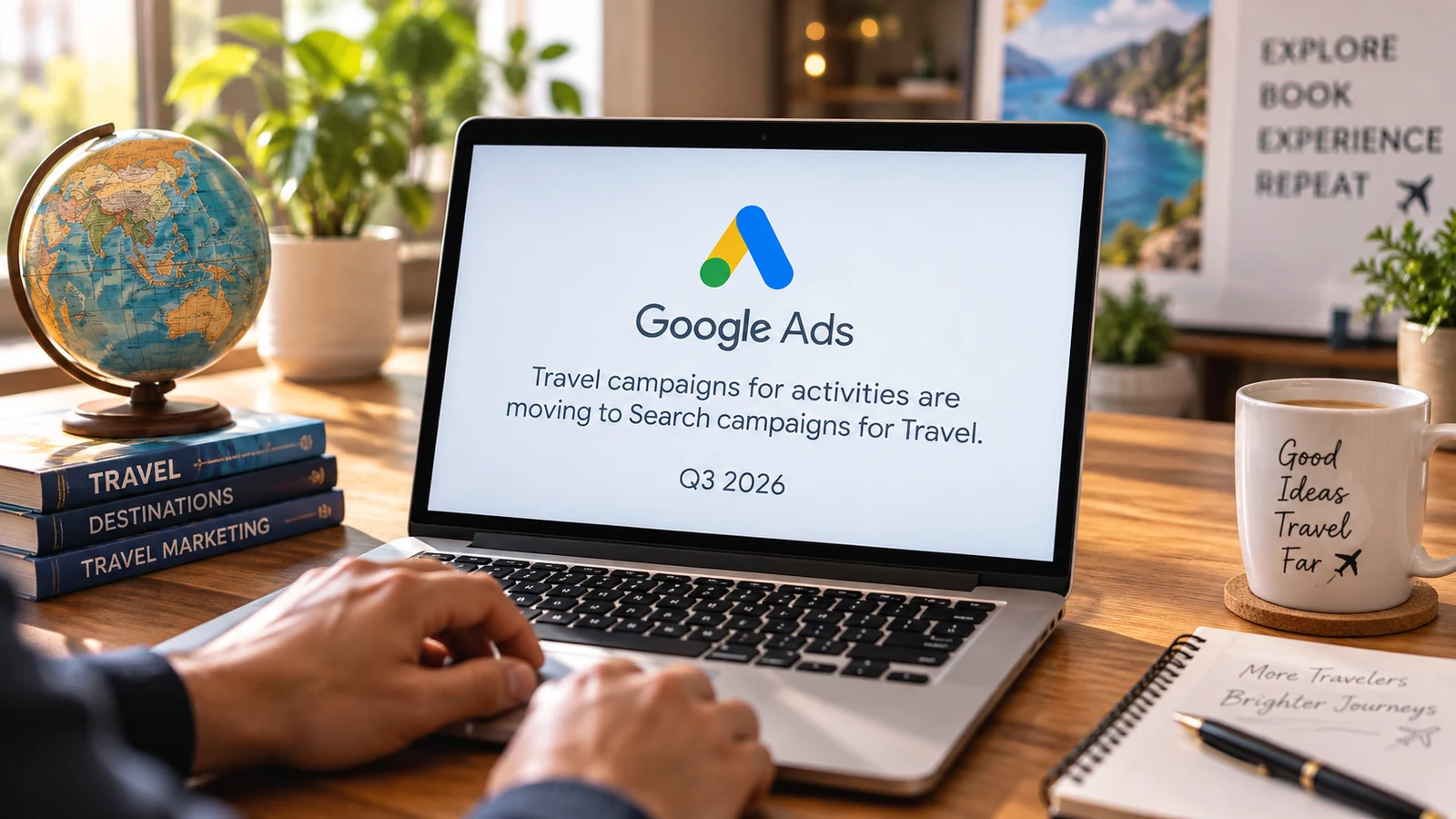
A significant Google travel-advertising change is happening during Q3 2026. Google says existing Travel campaigns for Things to Do are being migrated into new Search campaigns for Travel, with new campaign structures designed around travel inventory and relevant search behaviour.
For Sri Lankan tour operators, attractions and activity providers, this matters because Google's travel ecosystem is moving further toward connecting specific traveller searches with bookable experiences.
The technical change is important, but the larger business lesson is even more important: your digital product needs to be structured properly.
A tour company cannot expect Google to efficiently advertise a wildlife tour when the only relevant information exists inside one paragraph on a generic homepage. A cooking experience, surf lesson, safari or attraction needs a useful product page that clearly explains what the experience is, how it works and how someone can take the next step.
Google's current travel policies specifically emphasize relevant landing and booking pages rather than generalized pages that force the traveller to search again for the actual product.
This is exactly where many Sri Lankan tourism websites remain weak.
A company may offer fifteen excellent experiences while presenting all of them on one long “Services” page. From a technical and conversion perspective, that creates limited context. Dedicated pages can provide clearer information around location, duration, inclusions, meeting points, pricing or enquiry options.
Direct booking infrastructure becomes more relevant as well. Google distinguishes official tour-operator inventory and booking experiences from third-party listings, creating opportunities for businesses that maintain proper official booking paths.
This does not mean every small activity business suddenly needs an advanced ecommerce platform. It means businesses should begin thinking of each experience as a digital product rather than an item mentioned somewhere online.
Search advertising also becomes stronger when product structure is clear. Someone searching for a Yala morning safari should land on information about a Yala morning safari rather than a homepage containing beach tours, airport transfers and whale watching.
Relevance improves both customer experience and campaign efficiency.
The broader direction is clear. Google's travel systems continue moving toward structured, direct and commercially useful travel information. Tourism companies with strong product pages, accurate information and simple booking journeys are better positioned to take advantage of those changes.
At Tourithm, we build tourism websites around this product-level structure because modern travel marketing increasingly depends on more than simply owning a domain. The website needs to communicate to travellers and platforms exactly what the business sells.