Blog
Sri Lanka Is Planning Tourism to 2031. Some Businesses Still Cannot Tell Which Ad Produced Yesterday’s Booking.
September 15, 2026
Sri Lanka has launched work on its 2026–2031 tourism strategy and global promotional roadmap. Tourism businesses should build their own data-driven growth roadmap.
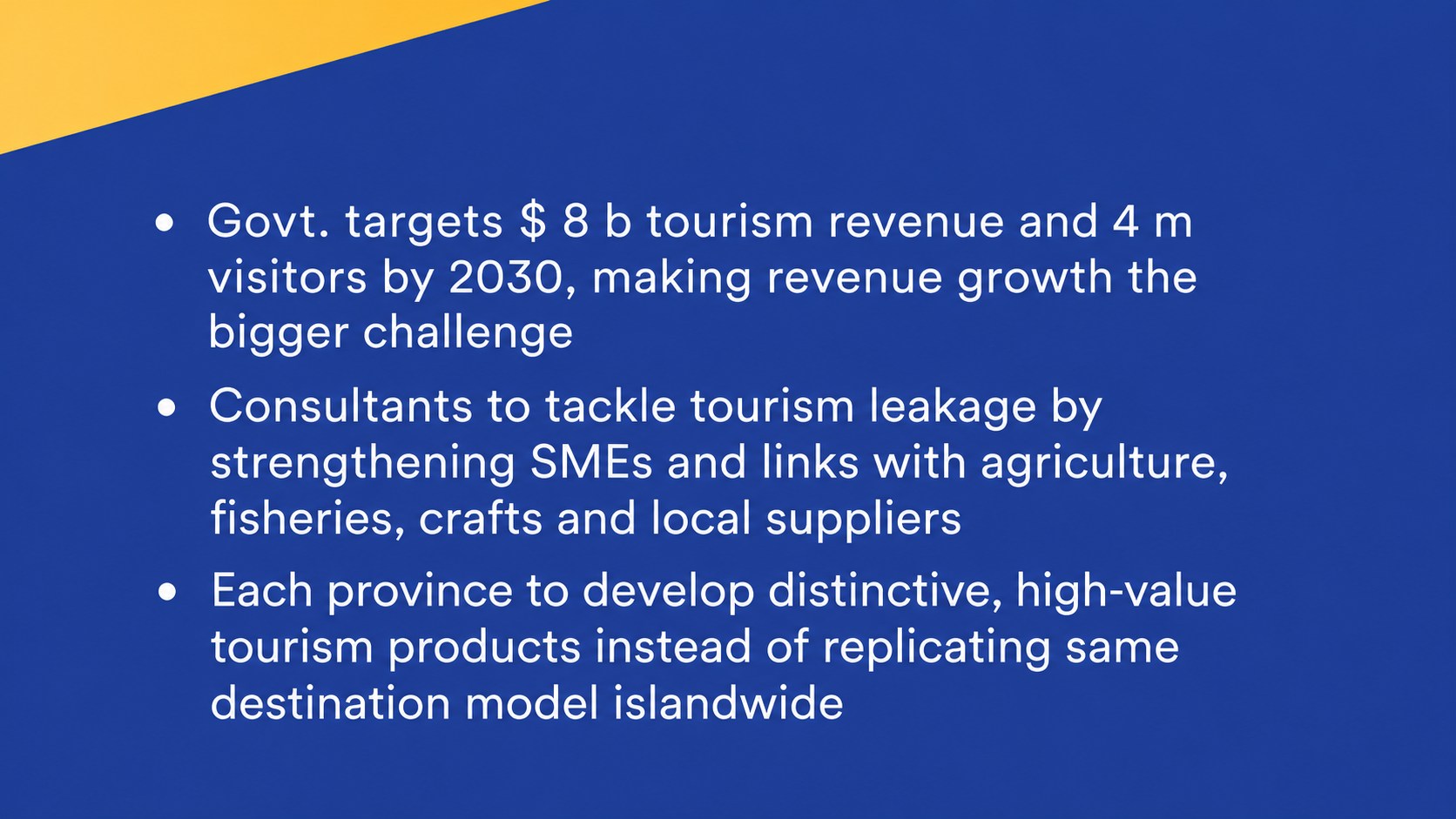
Sri Lanka officially launched work on a National Tourism Strategic Plan for 2026–2031 alongside a Global Promotional Campaign Road Map at the end of August. The national work includes demand and supply analysis, marketing strategy, investment requirements and a broader implementation framework for the coming years.
The scale is national, but the principle applies directly to individual tourism businesses. Growth becomes easier to manage when decisions are made from information rather than instinct.
Many operators still cannot answer basic marketing questions accurately. Which market generates the highest-value bookings? Which advertisements produced customers rather than messages? How long does the average customer take to book? Which tour has the strongest margin? Which website pages produce enquiries? Which customers cancel most often?
Without this information, strategy becomes a collection of guesses.
Data does not need to mean installing an expensive enterprise platform. A small tourism business can begin with consistent enquiry records, website analytics, campaign tracking and a basic customer database. The important part is deciding which information matters and collecting it consistently.
For example, every serious enquiry can record country, travel date, service requested, lead source, approximate booking value and final outcome. After enough enquiries, the business can begin comparing conversion rates instead of simply comparing lead counts.
Website data adds another layer. If hundreds of users visit one tour page but almost nobody proceeds toward an enquiry, there may be a product, pricing or conversion problem. If a smaller destination guide consistently introduces high-value customers to the website, that content may deserve more investment.
Advertising data then becomes much more useful because it can be connected to actual sales outcomes. A campaign with expensive clicks may still be profitable if those users purchase high-value products, while a campaign producing cheap traffic can be commercially useless.
Businesses should also establish clear reporting periods. Daily fluctuations can create unnecessary panic, especially in tourism where booking cycles can be long. Weekly and monthly reporting helps reveal patterns without encouraging constant reaction to individual leads.
The strongest data strategy also includes qualitative information. Why did customers choose the company? Which questions appear repeatedly before booking? What caused customers to reject quotations? Reviews, sales conversations and customer feedback can explain things that advertising dashboards cannot.
Technology should support the decision rather than become the strategy itself. Analytics software, CRMs and automation are valuable only when the business knows what it wants to learn.
Sri Lanka is building a strategic roadmap because a tourism industry cannot be managed effectively one random decision at a time. Individual companies should apply the same logic.
At Tourithm, we believe a digital strategy should eventually tell a business not only how much attention it received, but which actions actually created customers and where the next growth opportunity exists.