Blog / / Tourithm
“Eco-Friendly” Has Become One of Tourism Marketing's Easiest Words to Use and Hardest Words to Prove
Sri Lanka is prioritizing sustainable tourism, but tourism businesses need evidence behind green claims. Learn how credibility and digital transparency matter.
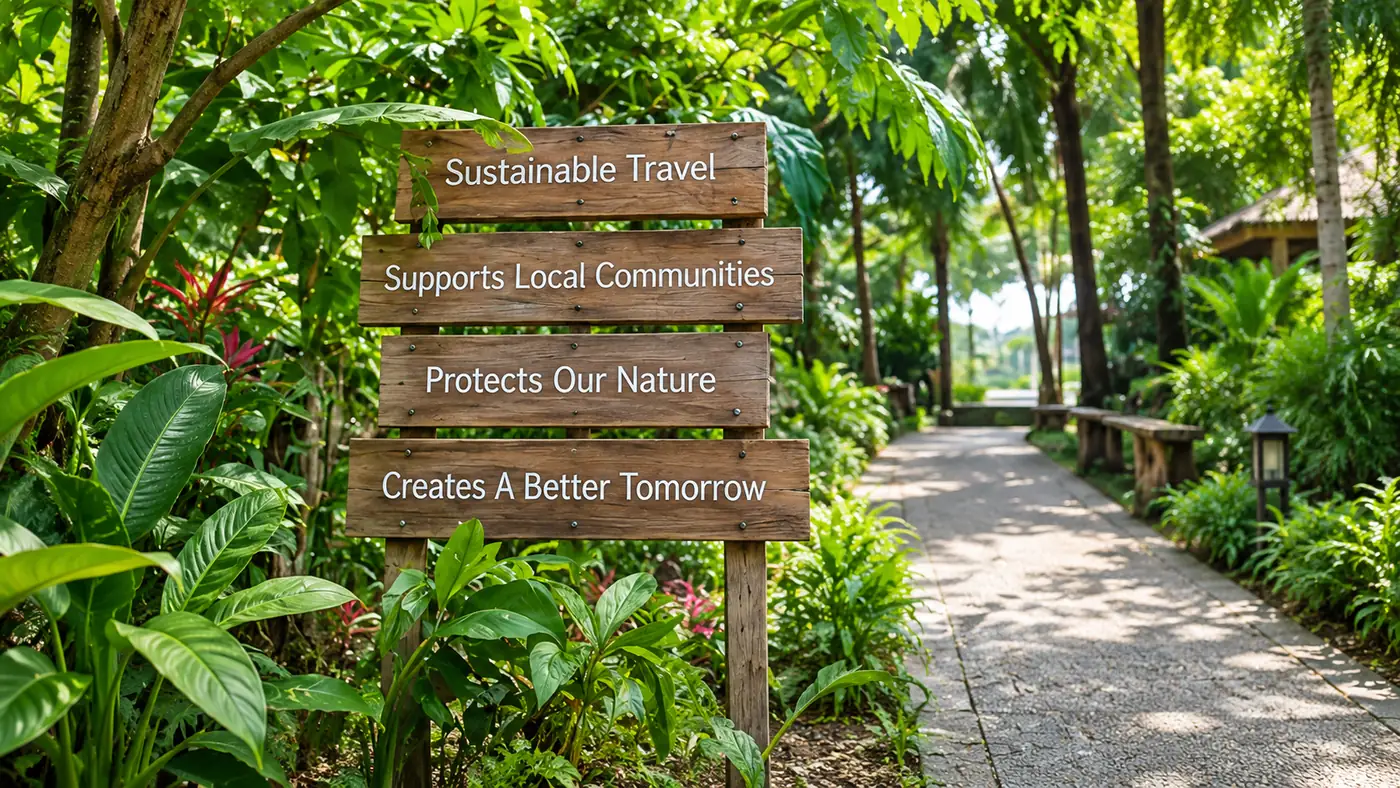
Sri Lanka Tourism continues to position sustainability and responsible travel as central parts of the country's long-term tourism direction. The SLTDA describes sustainable tourism as a priority for protecting natural and cultural heritage while creating positive economic and social outcomes.
This creates opportunities for eco-lodges, community tourism, wildlife experiences, wellness businesses and accommodation providers. It also creates a marketing problem.
Almost any business can write “eco-friendly” on its website.
The customer still needs to know what that means.
Does the property reduce single-use plastics? Is water managed differently? Are local people employed? Does the restaurant source ingredients locally? Does the safari operator follow responsible wildlife practices? Is waste separated? Is renewable energy being used? Are conservation projects supported?
Specific actions create credibility. Generic labels create claims.
This distinction matters because modern travellers can investigate businesses extremely quickly. A website may make strong sustainability promises while guest reviews mention excessive plastic use or irresponsible wildlife interaction. That contradiction can damage trust more than saying nothing at all.
Tourism companies therefore need evidence-based sustainability marketing.
A sustainability page should explain what the business actually does rather than simply repeating broad environmental language. If the company has legitimate certifications, partnerships or measurable programmes, show them accurately. If the business is still improving, communicate progress without pretending the work is complete.
Photography and content can provide proof too. Community partnerships, local sourcing, conservation work and operational practices can become useful stories when they are real rather than staged for marketing.
The same principle applies to advertisements. Avoid claims that are difficult to substantiate simply because environmentally conscious language performs well. Trust is more valuable than a temporary increase in clicks.
Responsible tourism can also become part of the product itself. Travellers may be willing to choose one experience over another because they understand where their spending goes and how the business interacts with local communities or natural environments.
That value has to be communicated clearly.
Sri Lanka's sustainability positioning creates an important direction for the industry, but credibility will determine which businesses actually benefit from it.
At Tourithm, we believe strong tourism marketing should make real strengths easier to see rather than invent strengths that do not exist. Sustainable tourism becomes commercially powerful when the customer can understand and believe the evidence behind the claim.